
Your brain is not an isolated organ. It is metabolically expensive, inflammation-sensitive, and deeply dependent on stable blood sugar, efficient mitochondria, and a regulated nervous system.
If you want sharper memory and long-term cognitive resilience, you don’t “hack” the brain. You stabilize the system that powers it.
There is a reason, researchers sometimes refer to Alzheimer’s disease as “type 3 diabetes.” The term isn’t formal medical nomenclature, but it reflects a real physiological pattern: impaired insulin signaling and glucose metabolism in the brain. When cells cannot efficiently use glucose, they become energetically compromised. Over time, this drives inflammation, oxidative stress, vascular damage, and neurodegeneration.
https://www.sundardasnaturopathy.com/digestivewellness
The brain consumes roughly 20% of your daily energy despite representing only about 2% of body weight. It requires constant fuel delivery. Unlike muscle tissue, it cannot simply “rest” through a glucose crash. When blood sugar swings high and then drops rapidly, you feel it immediately: brain fog, irritability, reduced focus, and slower recall.
Chronic instability is more concerning than occasional fluctuation. Repeated glucose spikes elevate insulin. Persistently high insulin promotes inflammatory signalling and damages the delicate endothelial lining of small cerebral blood vessels. This impairs oxygen delivery and nutrient exchange. Over years, that vascular stress compounds cognitive decline risk.
https://blog.drsundardas.com/is-your-fatty-liver-shortening-your-life-span/
If cognitive performance matters to you—clarity, memory retention, decision speed—glucose stability is foundational.
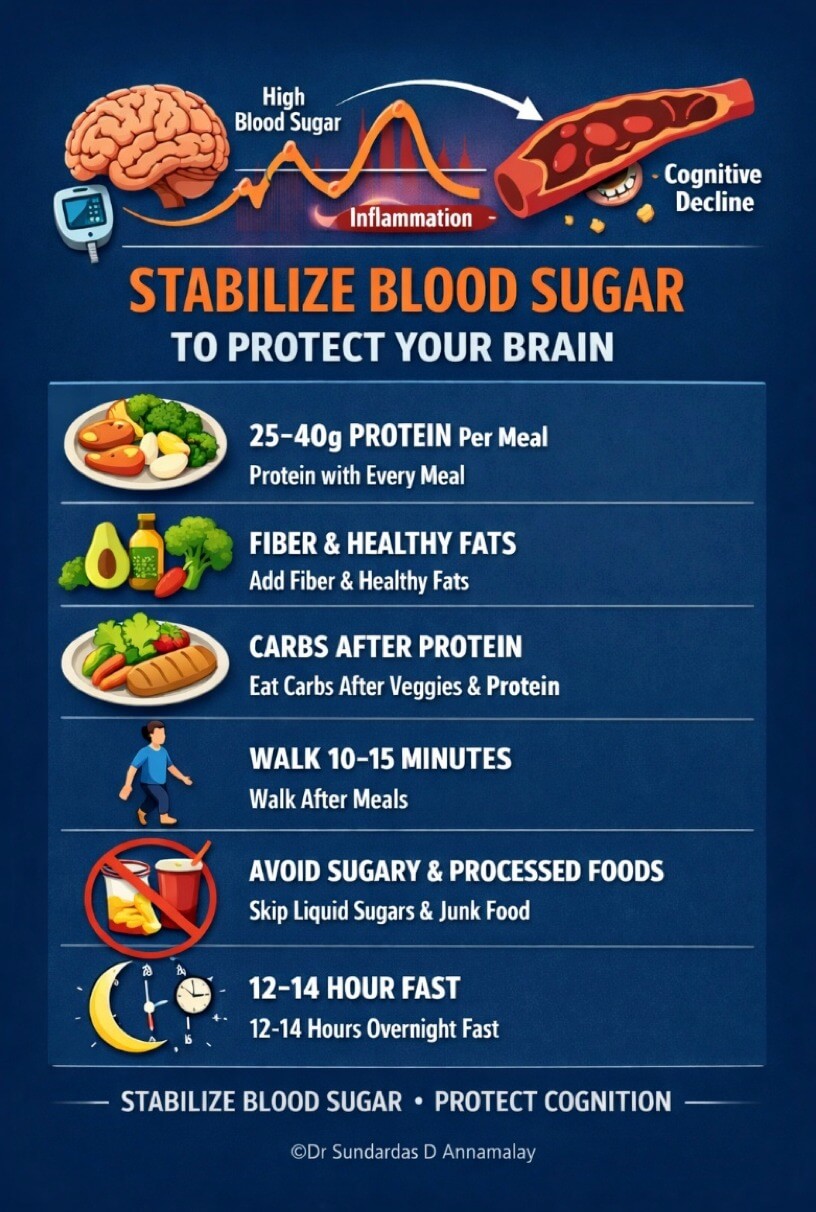
- Stabilize Blood Sugar to Protect Cognitive Function
This is not about eliminating carbohydrates. It is about controlling variability.
Here is the implementation framework:
- Build meals around protein (25–40g).
Protein slows gastric emptying, blunts glucose spikes, and supports neurotransmitter production. A practical target per meal:
- 3–5 eggs
- 150–200g Greek yogurt
- 120–180g chicken, fish, or lean meat
- 1 cup cottage cheese
- Protein shake (25–40g whey or plant protein)
- Add fiber and healthy fats
Fiber reduces glucose absorption speed. Fats extend satiety and stabilize post-meal curves. Examples:
- Leafy greens, broccoli, zucchini, lentils
- Olive oil, avocado, nuts, seeds
Protein + fiber + fat creates metabolic friction. Friction prevents spikes.
- Eat carbohydrates after protein and vegetables.
Food order matters. Starting a meal with protein and vegetables reduces postprandial glucose excursions compared to eating refined carbohydrates first. This is a simple behavioral shift with measurable impact. - Walk 10–15 minutes after meals
Post-meal walking increases skeletal muscle glucose uptake independent of insulin. You are mechanically lowering your glucose curve. This single habit meaningfully reduces glycemic variability.
- Eliminate liquid sugars and ultra-processed snacks
Liquid carbohydrates bypass satiety signals and spike blood glucose rapidly. Ultra-processed foods combine refined starch, sugar, and industrial fats in ratios that maximize insulin response.
- Aim for 12–14 hours overnight without food.
An overnight fasting window improves insulin sensitivity and reduces late-night glucose elevations. This supports mitochondrial repair and metabolic flexibility.
Why This Protects the Brain
Stable glucose:
- Reduces inflammatory cytokine activity
- Protects microvascular circulation
- Supports mitochondrial ATP production
- Improves sustained attention and working memory
- Decreases long-term neurodegenerative risk factors
You do not improve cognition by stacking supplements while ignoring metabolic chaos. You improve cognition by stabilizing the terrain.
The brain does not need hacks.
It needs stable fuel, low inflammation, and consistent signalling.
https://www.sundardasnaturopathy.com/neuroplasticity
Control the system
Clarity follows
If you need help you can click HERE to review your lifestyle choices and find out what you can do to improve it.
Health and Wellness Assessment
We are here for you at Sundardas Naturopathic Clinic.
Yours in Health,

Prof Sundardas D Annamalay