
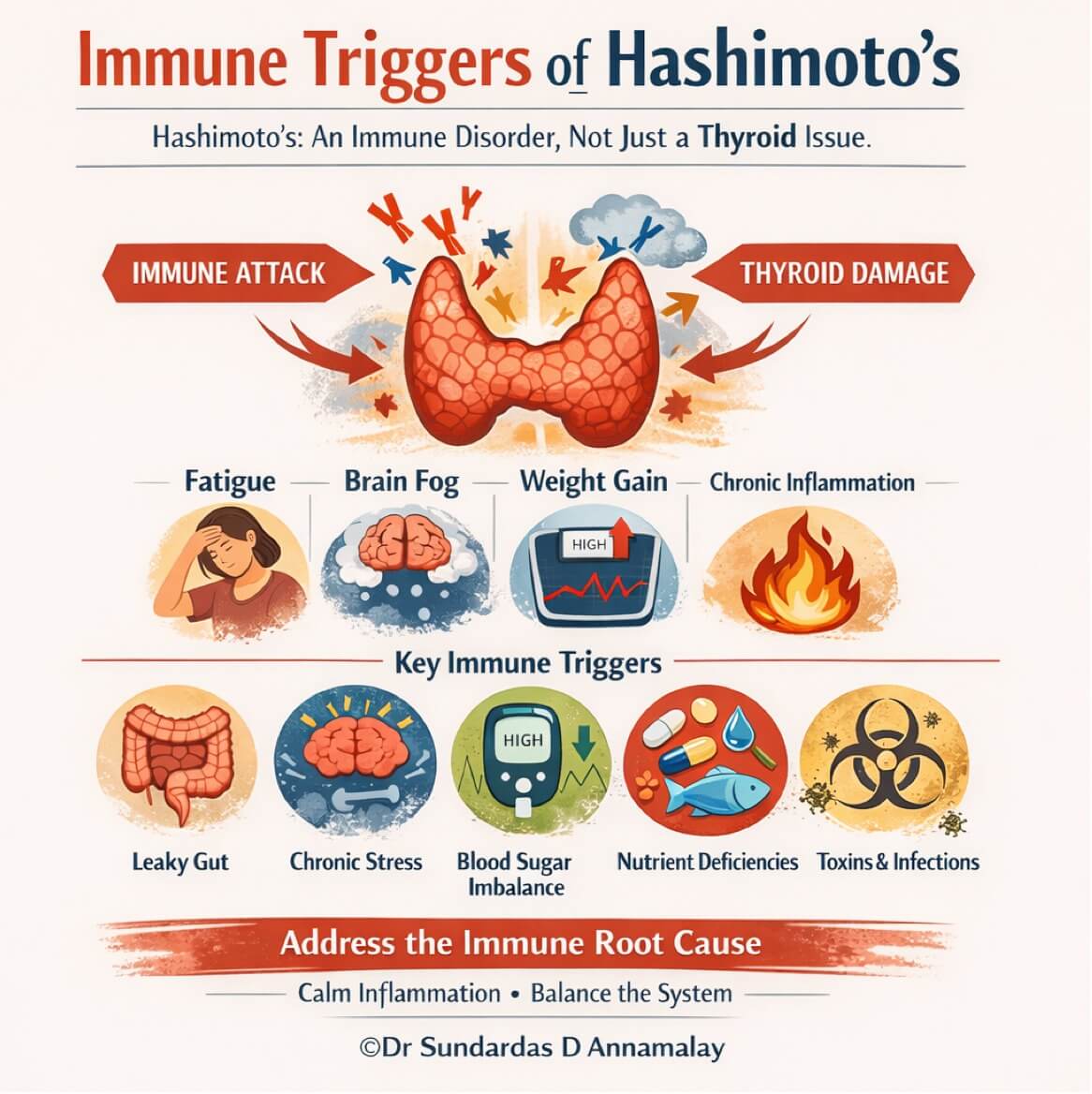
Hashimoto’s isn’t a thyroid problem at its core. It’s an immune system problem with a thyroid consequence. In Hashimoto’s, the immune system mistakenly identifies thyroid tissue as a threat. It produces antibodies most commonly thyroid peroxidase (TPO) and thyroglobulin (TG) antibodies — that gradually damage the gland. Over time, this impairs hormone production. The result looks like hypothyroidism. But the driver isn’t hormone deficiency. It’s immune dysregulation.
And when the immune system becomes dysregulated, the thyroid is often one of the first targets.
Why?
Because the thyroid is highly vascular, metabolically active, and sensitive to inflammatory signaling. It sits at the intersection of stress hormones, blood sugar regulation, nutrient status, and gut health. When systemic inflammation rises, the thyroid feels it early.
That’s why so many people experience:
- Persistent fatigue that doesn’t resolve with rest
- Brain fog and slowed cognition
- Weight shifts that feel disproportionate to intake
- Cold sensitivity
- Hair thinning
- Low mood
- Subtle but chronic inflammation that never fully settles
Many people try to “support the thyroid” in isolation — adding iodine, switching medications, increasing dosage, or taking glandular supplements — without asking a more important question:
Why is the immune system attacking in the first place?
Immune dysregulation rarely happens randomly. It’s typically driven by layered triggers. The most common include:
Gut permeability and microbiome imbalance
Roughly 70% of immune tissue is associated with the gut. When the intestinal barrier becomes compromised (“leaky gut”), immune cells are exposed to food antigens and microbial fragments that shouldn’t enter circulation. This can increase systemic inflammation and promote autoimmunity in genetically susceptible individuals. https://www.sundardasnaturopathy.com/digestivewellness
Chronic stress
Sustained cortisol dysregulation alters immune signaling. Initially it suppresses immunity; over time it can create immune instability — a state where regulation falters. Stress also impairs gut integrity and blood sugar control, amplifying inflammatory load.
Blood sugar volatility
Frequent glucose spikes increase inflammatory cytokines. Over time, this promotes oxidative stress and immune activation. The thyroid, again, is highly sensitive to these signals.
Nutrient insufficiencies
Selenium, zinc, iron, vitamin D, and omega-3 fatty acids all influence immune tolerance and thyroid function. Deficiency doesn’t just impair hormone production — it can impair immune regulation itself.
Environmental triggers
Infections, significant viral illness, mold exposure, and certain chemical toxins can act as initiating events in predisposed individuals.
https://blog.drsundardas.com/is-your-fatty-liver-shortening-your-life-span/
The pattern is consistent: immune activation precedes thyroid damage.
This is why some people continue to feel unwell even after their thyroid labs normalize on medication. Replacing hormone addresses the downstream effect. It does not quiet the immune fire upstream.
Supporting the thyroid without addressing immune triggers is like reinforcing the roof while the foundation shifts underneath.
The more strategic approach focuses on immune stabilization:
- Reducing inflammatory inputs
- Restoring gut integrity
- Improving blood sugar regulation
- Repleting key micronutrients
- Supporting stress resilience
When immune signaling calms, antibody levels often stabilize. Energy improves. Brain fog clears. Inflammation reduces.
The thyroid doesn’t operate in isolation. It reflects the broader immune environment.
Hashimoto’s is not simply about producing more hormone.
It’s about restoring immune balance.
If you need help you can click HERE to review your lifestyle choices and find out what you can do to improve it.
Health and Wellness Assessment
We are here for you at Sundardas Naturopathic Clinic.
Yours in Health,

Prof Sundardas D Annamalay