
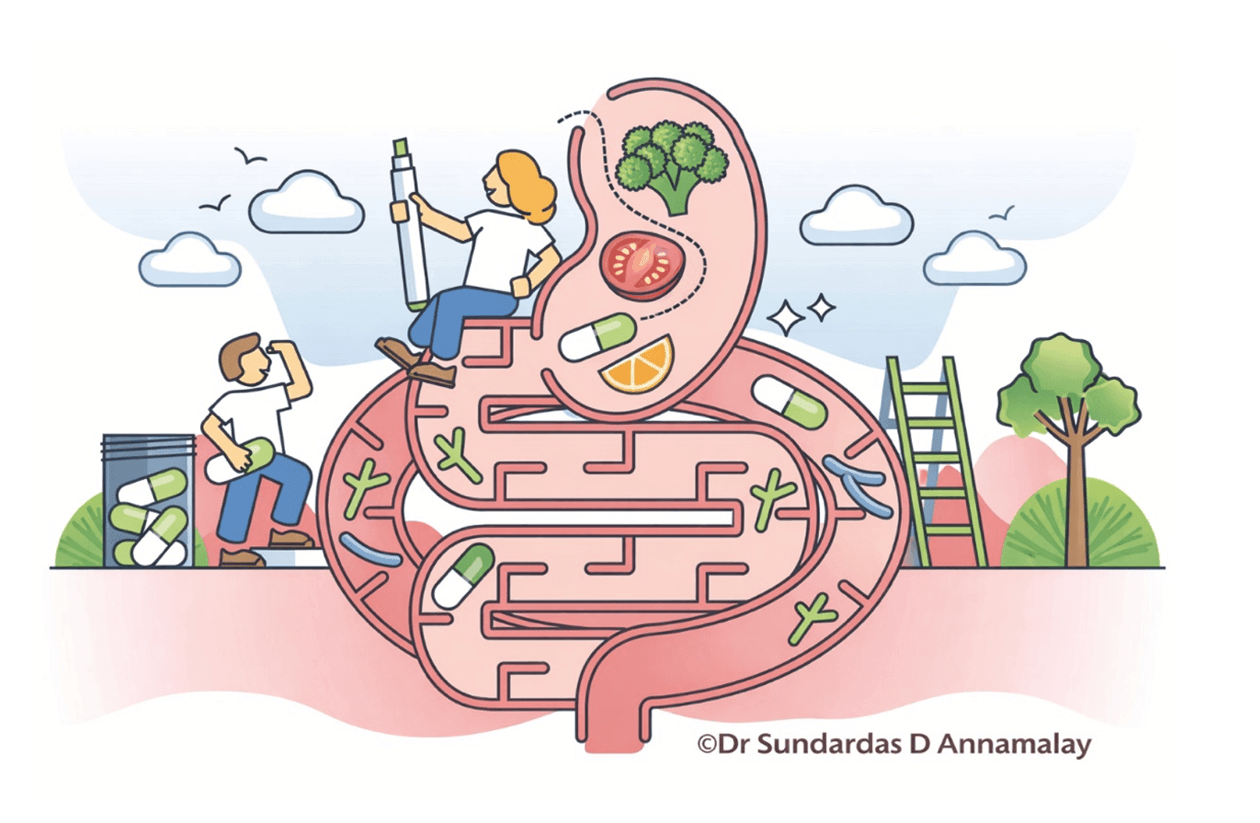
It is not a machine to be fueled and forgotten. It is a living ecosystem—dynamic, responsive, and deeply connected to every other system in your body. When you understand this, your relationship with food and health changes.
In a garden, life thrives on balance. The soil must be rich. The water must be steady. The sun must be present but not harsh. Too little care and plants wither. Too much of the wrong thing and weeds take over.
Your gut works the same way. (https://www.sundardasnaturopathy.com/neuroplasticity)
Inside your digestive tract lives a vast community of bacteria, fungi, and microorganisms—your microbiome. Think of them as the soil organisms of your internal garden. When they are diverse and balanced, they break down nutrients efficiently, produce essential vitamins, regulate inflammation, and even influence mood and cognition. When they are disrupted—by chronic stress, ultra-processed foods, antibiotics, lack of sleep, or environmental toxins—the ecosystem shifts. Beneficial species decline. Opportunistic strains overgrow. The soil becomes depleted.
And just like a struggling garden, the symptoms may not appear immediately. They show up gradually.
- Low energy
- Brain fog
- Bloating
- Cravings
- Skin issues
- Joint discomfort
- Mood swings
These are not random. They are signals that the ecosystem is out of balance.
https://blog.drsundardas.com/is-your-fatty-liver-shortening-your-life-span/
A healthy garden requires nourishment. In your gut, that nourishment comes primarily from whole, fiber-rich foods—vegetables, fruits, legumes, seeds, and properly prepared whole grains. Fiber acts like fertilizer for beneficial bacteria. Fermented foods such as yogurt, kefir, sauerkraut, kimchi, and miso introduce helpful microbes that enrich diversity. Polyphenol-rich foods—berries, green tea, herbs, dark chocolate—support microbial resilience.
But nourishment is not just about what you eat.
It’s also about rhythm.
Gardens thrive with natural cycles—day and night, seasons of growth and rest. Your gut follows circadian rhythms as well. Late-night eating, irregular meal timing, and constant grazing disrupt digestive signaling. When you allow periods of rest between meals, you activate processes like the migrating motor complex—your body’s internal “clean-up crew” that clears debris and maintains balance.
Stress is another powerful force.
In a garden, harsh weather can damage even the strongest plants. In the body, chronic stress alters gut motility, reduces stomach acid, impairs enzyme production, and shifts microbial balance. The gut and brain are in constant conversation through the vagus nerve and immune signaling. When your mind is overwhelmed, your gut feels it.
This is why calm eating matters. Slowing down. Chewing thoroughly. Being present.
The garden metaphor also reminds us of patience. You cannot plant seeds today and harvest tomorrow. Gut repair takes consistency. Microbial diversity improves gradually. Inflammation reduces step by step.
Energy stabilizes over time.
And when the ecosystem is supported? Energy becomes steady rather than spiking and crashing
- Mental clarity sharpens
- Immunity strengthens
- Skin glows
- Mood stabilizes
- Inflammation quiet
- The body feels resilient
Your gut is not separate from you—it is central to you. Roughly 70% of your immune system resides there. A significant portion of serotonin, a key neurotransmitter, is produced there. Nutrient absorption begins there. It is the gateway between the outside world and your internal environment.
- Tend to it deliberately
- Feed it diversity
- Honour its rhythms
- Reduce its stressors
- Allow it rest
- Be consistent
Because when your internal garden thrives, everything built upon it thrives too—your energy, your clarity, your vitality. And like any well-tended garden, the rewards compound over time.
If you need help you can click HERE to review your lifestyle choices and find out what you can do to improve it.
Health and Wellness Assessment
We are here for you at Sundardas Naturopathic Clinic.
Yours in Health,

Prof Sundardas D Annamalay