
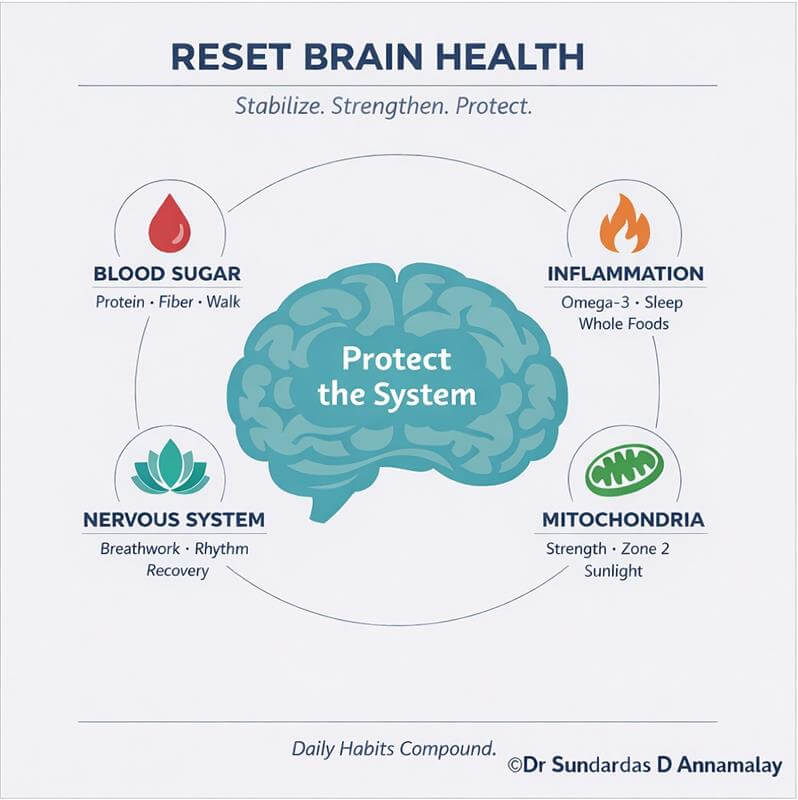
Your brain is not an isolated organ. It is metabolically expensive, inflammation-sensitive, and deeply dependent on stable blood sugar, efficient mitochondria, and a regulated nervous system. If you want sharper memory and long-term cognitive resilience, you don’t “hack” the brain. You stabilize the system that powers it. (https://www.sundardasnaturopathy.com/neuroplasticity)
Here’s a practical, implementation-focused framework.
- Stabilize Blood Sugar to Protect Cognitive Function
The brain consumes roughly 20% of your daily energy. When blood sugar swings, mental clarity drops. Chronic spikes and crashes increase inflammation, oxidative stress, and long-term dementia risk.
Practical strategies:
- Build meals around protein (25–40g), fiber, and healthy fats
- Eat carbohydrates after protein and vegetables
- Walk for 10–15 minutes after meals
- Avoid liquid sugars and ultra-processed snacks
- Aim for 12 to 14 hours overnight without food
- Stable glucose improves focus, reduces brain fog, and protects small cerebral blood vessels
- Reduce Systemic Inflammation That Impacts Cognition
Chronic inflammation accelerates neurodegeneration and disrupts neurotransmitter balance. The brain responds quickly to inflammatory signals from the gut and immune system.
Practical strategies:
- Prioritize whole foods: vegetables, berries, olive oil, nuts, fatty fish
- Reduce refined sugar and seed oils high in omega-6
- Optimize gut health with fermented foods and diverse fiber
- Strength train 2–4x per week (lowers inflammatory markers)
- Sleep 7–9 hours consistently
Omega-3 intake (from salmon, sardines, or supplementation) directly supports neuronal membrane stability and reduces neuroinflammation. https://blog.drsundardas.com/is-your-fatty-liver-shortening-your-life-span/
- Strengthen Mitochondrial Energy in Brain Cells
Mitochondria are the brain’s power generators. When they decline, cognitive performance drops before symptoms are obvious.
You strengthen mitochondria through stress adaptation.
Practical strategies:
- Resistance training and interval training (2–3x weekly)
- Zone 2 cardio (30–45 minutes, 2–3x weekly)
- Cold exposure (brief, controlled)
- Morning sunlight within 30 minutes of waking
- Adequate micronutrients: magnesium, B vitamins, creatine, CoQ10 (if clinically appropriate)
Exercise remains the most powerful mitochondrial intervention available.
- Regulate the Nervous System for Mental Clarity
Chronic stress shifts the brain into survival mode. Memory, executive function, and emotional regulation decline when the sympathetic nervous system stays activated.
Practical strategies:
- Daily breathwork (5 minutes of slow nasal breathing)
- Non-negotiable sleep routine (same sleep/wake window)
- Limit late-night light exposure
- Schedule device-free time
- Build social connection and meaningful interaction
- A regulated nervous system improves focus, reduces brain fog, and enhances learning capacity
- Protect Long-Term Brain Structure
Neuroplasticity depends on challenge. The brain deteriorates when under-stimulated
Practical strategies:
- Learn complex skills (language, instrument, technical training)
- Read and write regularly
- Engage in problem-solving activities
- Maintain strong social engagement
Cognitive reserve builds through novelty and effort, not passive consumption.
Implementation Blueprint
If starting from zero, prioritize in this order:
- Sleep regularity
- Blood sugar stabilization
- Resistance training
- Anti-inflammatory nutrition
Daily nervous system regulation
Small, consistent actions compound.
Brain health is not about one supplement or biohack. It is about metabolic stability, mitochondrial strength, low inflammation, and a calm nervous system sustained over years.
Protect the system — and the brain follows.
If you need help you can click HERE to review your lifestyle choices and find out what you can do to improve it.
Health and Wellness Assessment
We are here for you at Sundardas Naturopathic Clinic.
Yours in Health,

Prof Sundardas D Annamalay