
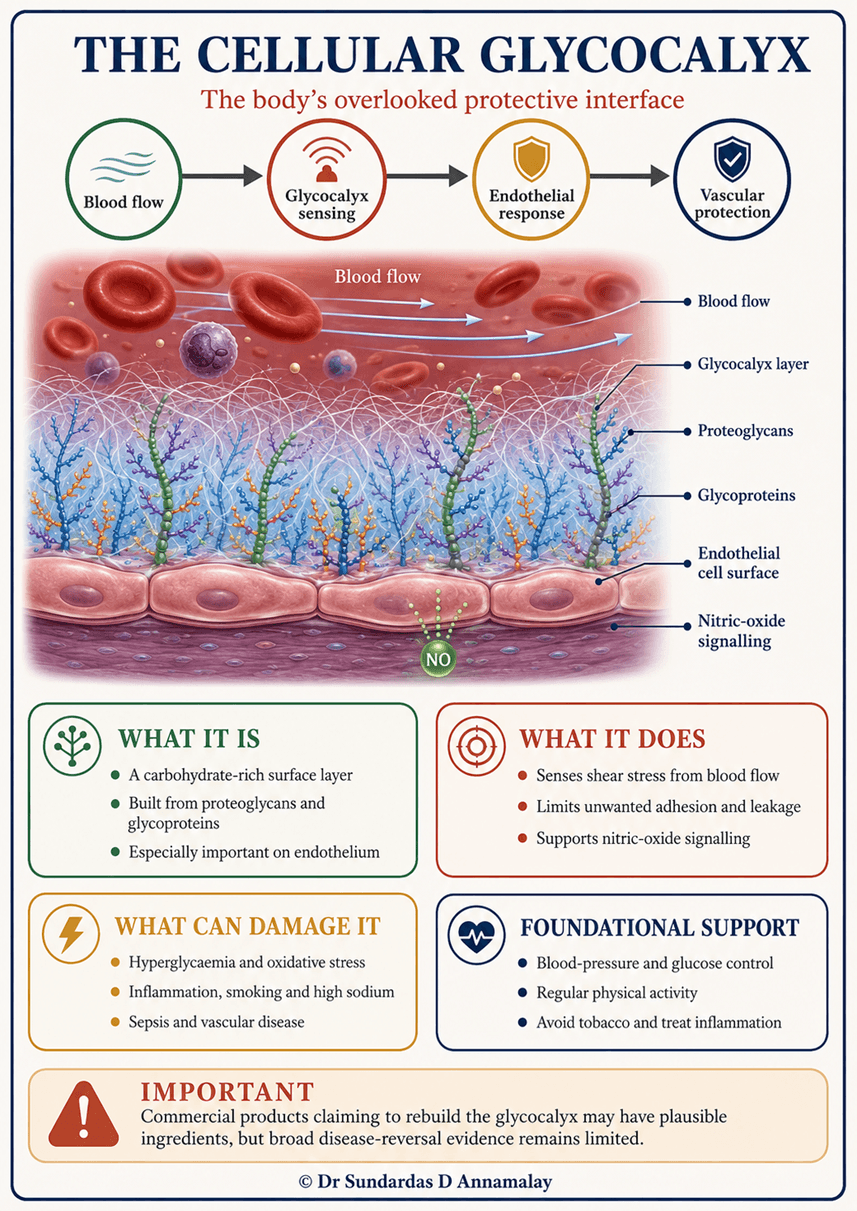
Many cells are covered by a delicate, carbohydrate-rich layer called the glycocalyx. It is easy to overlook because it is thin, dynamic and difficult to preserve during conventional tissue preparation. Yet this layer helps organise how cells meet the world around them.
The endothelial glycocalyx lines the inner surface of blood vessels. It is formed from membrane-bound proteoglycans, glycoproteins, glycosaminoglycans and proteins absorbed from the blood. Rather than being a fixed coating, it is continuously shed, rebuilt and altered by its environment.
This structure creates a protective interface between flowing blood and the endothelial cells beneath it. It influences permeability, inflammation, clotting, cell adhesion and the mechanical sensing of blood flow.
As blood moves along a vessel, it creates shear stress. A healthy glycocalyx helps transmit that force to endothelial cells, supporting nitric-oxide production and appropriate vessel relaxation. When the layer is degraded, mechanosensing and vascular responsiveness may be impaired.
The glycocalyx also acts as a selective barrier. It helps keep blood cells and platelets from unnecessarily contacting the vessel wall. It contributes to the control of fluid and protein movement across capillaries.
Inflammation can rapidly alter this interface. Enzymes and reactive molecules may cleave components from the glycocalyx, a process called shedding. Fragments such as syndecan-1 or hyaluronic acid can then appear in the circulation and are studied as markers of endothelial injury.
https://www.sundardasnaturopathy.com/programs/cellular-rejuvenation-healthy-ageing
Severe glycocalyx damage occurs in conditions such as sepsis, major trauma and critical illness. More gradual impairment has been investigated in diabetes, hypertension, kidney disease, cardiovascular disease and ageing.
High blood glucose can damage the glycocalyx through oxidative stress, glycation and inflammatory signalling. This may contribute to microvascular problems in the kidneys, eyes and peripheral tissues. Glucose management is therefore vascular protection at the cellular interface.
High sodium intake may affect endothelial function and the glycocalyx in salt-sensitive individuals, even when blood pressure changes are not dramatic. This does not mean sodium should be eliminated. Needs vary with climate, sweating, medication, kidney function and disease.
Smoking exposes the endothelium to oxidants and inflammatory chemicals. It reduces nitric-oxide availability and promotes vascular injury. No supplement can fully compensate for continued tobacco exposure.
Exercise creates repeated, physiological changes in blood flow. These shear forces stimulate endothelial adaptation and nitric-oxide signalling. Regular activity is therefore one of the most practical ways to support vascular function.
However, exercise cannot be prescribed identically to everyone. Chest pain, unexplained breathlessness, fainting, severe hypertension and vascular disease require assessment before intensive training.
Some nutrients and foods are studied for endothelial effects, including omega-3 fatty acids, polyphenols and components involved in glycosaminoglycan synthesis. Their effects are part of broader physiology, not proof that a specific capsule reconstructs the glycocalyx throughout the body.
Hydration supports blood volume and circulation, but excessive water does not create a thicker glycocalyx. The kidneys, hormones, electrolytes and vascular system regulate fluid balance. Both dehydration and overhydration can be harmful.
Commercial glycocalyx supplements often contain seaweed extracts, glucosamine-like compounds, antioxidants or polysaccharides. The biological rationale may be interesting, but product-specific claims require human clinical evidence. An ingredient being part of a pathway does not prove that it reaches and rebuilds a vascular layer.
Blood pressure, cholesterol, glucose, kidney function, inflammation and physical activity remain more established vascular priorities. Medications prescribed for these conditions should not be stopped in favour of a glycocalyx product.
The glycocalyx also covers epithelial and immune cells, where it influences recognition, adhesion and protection. Cancer cells can alter their glycocalyx to affect movement and immune evasion, demonstrating that a thicker layer is not automatically healthier.
A responsible Cellular Rejuvenation Program does not try to maximise one structure. It seeks functional balance: a vessel lining that senses flow, resists inappropriate adhesion, regulates permeability and communicates with blood and tissues.
The glycocalyx teaches us that protection can be both strong and delicate. It is strong because it coordinates many vascular functions. It is delicate because inflammation and metabolic stress can alter it rapidly.
Supporting this interface begins with the fundamentals of vascular health rather than an exotic promise: movement, glucose control, blood-pressure management, smoke-free living, adequate sleep and appropriate medical care.
Rejuvenation often begins at the boundary where the body meets its environment. In the circulation, the glycocalyx is one of those critical boundaries.
A practical starting point
- Manage blood pressure, blood glucose, lipids and kidney health with appropriate professional care.
- Exercise regularly to support endothelial shear-stress signalling and circulation.
- Avoid smoking and address chronic inflammatory conditions.
- Moderate sodium according to individual health, climate, medication and clinical advice.
- Do not replace evidence-based cardiovascular treatment with glycocalyx supplements.
Medical note: Vascular symptoms and abnormal blood pressure require medical assessment. Supplement evidence is product- and condition-specific.
Visit the Cellular Rejuvenation Program blog for related articles and practical health education.
We are here for you at the Sundardas Naturopathic Clinic.
Click here to review your health patterns and identify practical priorities through a Health and Wellness Assessment: Health and Wellness Assessment
Prof Sundardas D Annamalay
Book a private consultation today and take control of your own health. Email admin@naturaltherapies.com to make an appointment, or call +65 6323 6652. Consultations are also available via Zoom for online coaching clients.