
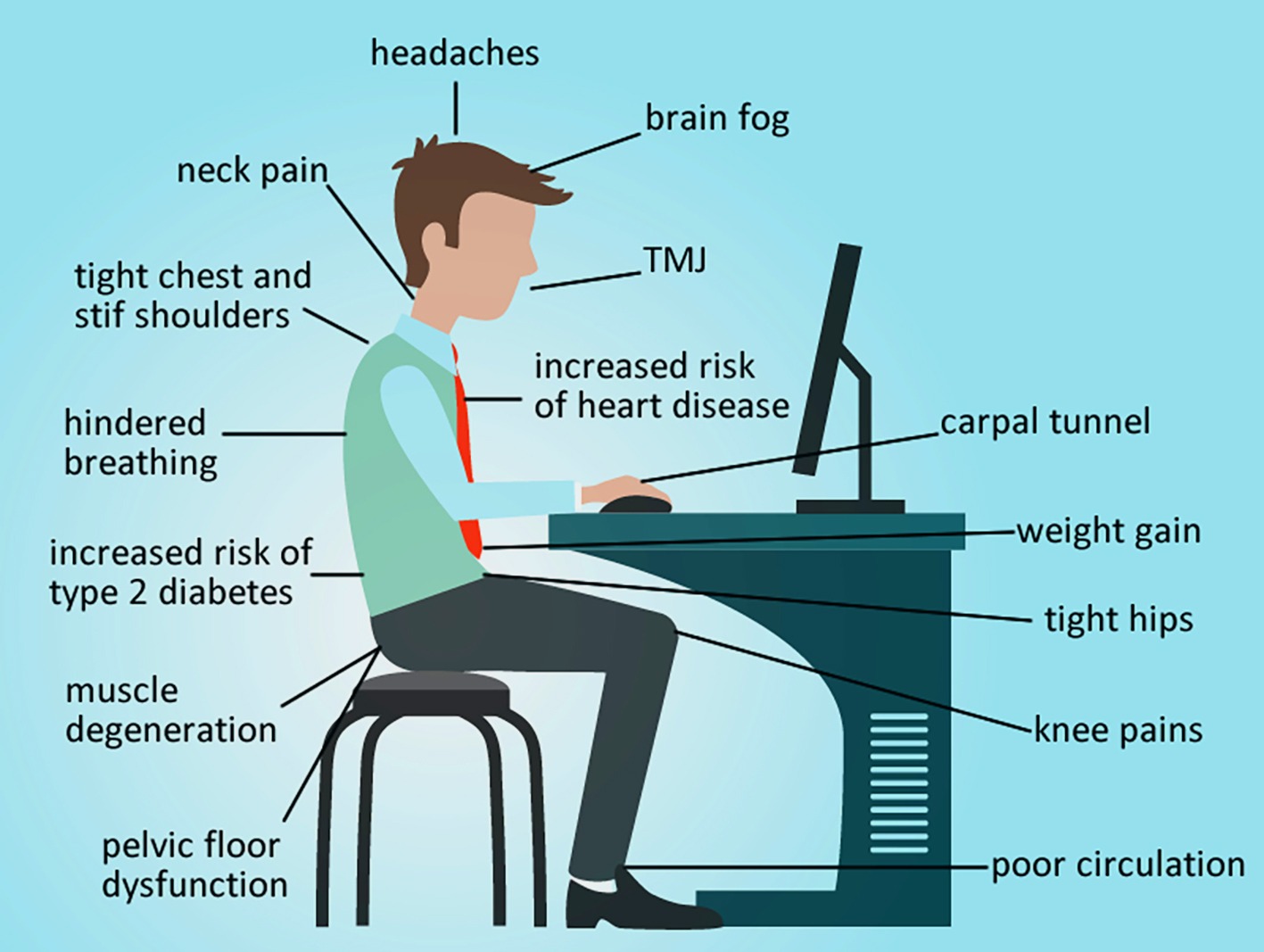
We’ve all heard the phrase “sitting is the new smoking.” It’s not just a catchy line—it’s the reality of modern life. Most of us spend 7–10 hours a day glued to chairs, couches, or car seats. Welcome to the age of sitting disease.
The New Epidemic of Sitting Disease
In the 21st century, technology has made life more convenient than ever. We can work, shop, learn, and socialize without ever leaving our chairs. Yet, this very convenience has fueled what health experts are now calling the “sitting disease.” Unlike infections or viruses, sitting disease isn’t contagious. It’s a lifestyle epidemic—an invisible health crisis creeping into offices, classrooms, and homes around the world.
What Is Sitting Disease?
Sitting disease refers to the cluster of health problems associated with prolonged sedentary behavior—spending too much time seated and inactive. On average, adults now sit between 7 and 10 hours per day. Office workers, students, gamers, and even retirees are increasingly at risk. The problem isn’t just lack of exercise; it’s the sheer number of hours spent immobilized in chairs, cars, and couches, often without realizing how harmful it is. https://www.linkedin.com/feed/update/urn:li:activity:7186257464181374976/
The Science Behind the Risks
Our bodies are designed for movement. When we sit for long periods, muscle activity drops, blood flow slows, and metabolism declines. This creates a cascade of negative effects. Studies show that prolonged sitting is linked to obesity, type 2 diabetes, cardiovascular disease, and certain cancers. It also accelerates aging and can shorten life expectancy, even in people who exercise regularly. In fact, research has found that 30 minutes at the gym cannot fully undo the damage caused by 8 hours of continuous sitting.
Beyond the physical risks, sitting takes a toll on mental health. Extended sedentary time has been associated with higher levels of anxiety and depression. Poor posture, common when slouching at desks or staring at screens, contributes to chronic back, neck, and shoulder pain—adding to the sense of fatigue and stress.
What’s the big deal?
When you sit too long, your body basically shuts down. Muscles go idle. Blood sugar spikes. Metabolism slows. Over time, this increases your risk of obesity, diabetes, heart disease—even certain cancers. And here’sthe kicker: an hour at the gym doesn’t erase 8 hours of sitting.
The hidden side effects:
- Slouching wrecks your posture, leading to back and neck pain.
- Your brain fogs up—sedentary time is linked to anxiety and depression.
- Long-term sitters face shorter lifespans, even if they’re “healthy” in other ways.
Why it’s everywhere:
Work-from-home jobs, endless Netflix binges, long commutes, gaming, scrolling TikTok—it all adds up. Kids and teens are spending more time hunched over screens than outside playing. Sitting has quietly become a global health crisis, killing millions every year through lifestyle-related diseases. https://www.sundardasnaturopathy.com/painfree
The fix is surprisingly simple: https://www.sundardasnaturopathy.com/posturalwellness
- Stand up every 30–60 minutes—stretch, walk, grab water.
- Swap your chair for a standing desk, or pace during phone calls.
- Break up screen marathons with movement snacks—2–5 minutes of walking or bodyweight moves.
- At home, turn chores, gardening, or even dancing in the kitchen into your secret weapon against sitting.
Bottom line:
Sitting disease won’t make headlines like COVID, but it’s silently stealing years from millions of lives. The cure isn’t a pill—it’s movement. So, here’s your reminder: stand up, stretch, and move. Your future self will thank you.
If you need help you can click HERE to review your lifestyle choices and find out what you can do to improve it. Health and Wellness Assessment
We are here for you at Sundardas Naturopathic Clinic.
Yours in Health,

Prof Sundardas D Annamalay